
Rx · Prescription onlyInjected under the skin
BPC-157 / KPV / TB-500
Recovery plus gut barrier.
Your plan
$229/mo, $1,374 billed once for 6 months/mo
$1,374 billed once for 6 months · unused months refunded on a medical stop
No membership fee · this is the full price · free shipping · avg 4-week supply
- Medication, clinician care and dose adjustments, all in one price.
- ~28-day supply. Your clinician sets your exact dose, so yours may vary; your refill arrives as you finish the last one.



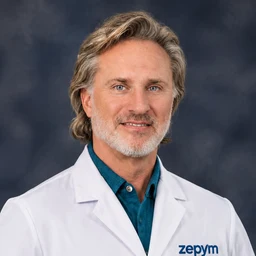




A licensed clinician on our care team reviews every request and prescribes only when it's clinically appropriate.
FDA status: Compounded medication, not FDA-approved.
What it's for
Who it's for
People whose injury comes with a lot of swelling or irritation.
How it's different
Adds KPV, a three-amino-acid fragment studied for calming inflammation, to the BPC-157 and TB-500 pair.
How it works
The BPC-157 and TB-500 recovery pair with KPV, the three-amino-acid tail of alpha-MSH, a natural hormone that calms inflammatory signaling. KPV has been studied mostly for gut inflammation and the gut barrier, which is why this blend is chosen when recovery and gut symptoms go together.
How to use it and what arrives
1 vial · lasts 4 weeks
3 mg / 3 mg / 3 mg/mL · 5 mL vial
- How
- Injected under the skin
- How often
- 5 days a week
- When
- In the morning
Good to know
An inflamed joint that is hot, red or keeps swelling needs an exam, not a peptide.
What the research shows
A 15-amino-acid peptide from a gastric protein. Almost all of the evidence is from rodent and other animal studies; human data are a handful of small, uncontrolled reports.
Human studies
3 pilot studies
A 2025 review found only three human pilot studies: intra-articular knee pain, interstitial cystitis and an intravenous safety study. None is a controlled trial of tendon, muscle or bone healing.
Review of BPC-157 for musculoskeletal healing, PMC 2025Intravenous safety
2 participants
A pilot study gave two healthy adults infusions of up to 20 mg. No measurable change in heart, liver, kidney, thyroid or glucose markers was seen, and no side effects were reported. Two people cannot establish safety.
Safety of intravenous infusion of BPC157 in humans: a pilot study, Europe PMCAnimal data
animal data only
Rodent and other animal studies of tendon transection, muscle crush and bone fracture report faster healing. Most of this work comes from one research group in Croatia.
Review of BPC-157 for musculoskeletal healing, PMC 2025
No published human study has measured how BPC-157 behaves in people at the doses sold here. Research-grade and compounded versions were not the ones studied in animals or in the few human reports.
What this does not say
- No controlled human trial shows that BPC-157 heals tendons, muscles, bone or gut tissue.
- FDA's list of bulk drug substances that may present significant safety risks describes compounded BPC-157 as carrying immunogenicity risk, with limited safety data for the proposed routes. The entry is among withdrawn nominations and the compounding rules have changed, so check the FDA page before relying on it.
- The brand products are not the compounded versions described by FDA and the reviews. Oral capsules were not studied in people.
Sources
- Review of BPC-157 in tissue repair and pain management: mechanisms and the state of the evidence. Int J Mol Sci, 2026
- Review of peptide therapy for tendon, ligament and muscle injury, including BPC-157. Pharmaceuticals (Basel), 2026
- BPC-157 and TB-500 improved Achilles tendon healing on histological and biomechanical measures in a rat model. Jt Dis Relat Surg, 2026
- Thymosin beta-4 (the parent of TB-500): the journey from laboratory to human trials in eye repair. Expert Opin Biol Ther, 2018
- Topically applied GHK-Cu as an anti-aging peptide: advantages, problems and prospects. Bioimpacts, 2025
Safety
FDA status: Compounded medication, not FDA-approved.
Side effects and precautions
- Recovery peptides are generally well tolerated.
- The most common effects are mild: redness, itching or a small bump at the injection site, headache, flushing or nausea in the first days.
- GHK-Cu contains copper: tell your clinician about Wilson's disease or copper sensitivity.
Get care right away
- Stop and seek care for hives, swelling of the face or lips or trouble breathing.
When it isn't prescribed
- Because these peptides support cell growth and blood-vessel formation, they are not prescribed with an active cancer, a cancer under evaluation, or during pregnancy or breastfeeding.
Tell your clinician about every medication you take.
Questions
What does KPV add?
KPV is a small peptide fragment studied for calming inflammatory signaling and supporting the gut barrier. It is added when recovery goals come with gut or inflammation complaints. Your clinician decides whether it is right for you.
How do I take it?
A small subcutaneous injection once a day with an insulin-style needle, usually in the abdomen or near the area you are treating. Your clinician sets the dose and the length of the protocol; the kit includes everything.
What are the side effects?
Mild and local for most people: redness, itching or a small bump where you inject, and occasionally headache, flushing or nausea in the first days. These peptides are not prescribed with an active or suspected cancer or in pregnancy. Read the safety information above.
How strong is the evidence?
Honest answer: early. There is decades of preclinical research and clinical experience, but few controlled human trials. Your clinician explains that before prescribing, and these peptides are prescribed off-label at their discretion.
Ready to start with BPC-157 / KPV / TB-500?
$229/mo · $1,374 billed once for 6 months
- Free shipping on every order
- No membership fee
- Same price at every dose
- HSA and FSA accepted